

Just yesterday, I read a post on Reddit about a young man who shared how he nearly wrote a condolence email using AI. According to him, the AI he was using had crafted a well-sounding condolence message, but just as he was about to hit the send button, reality hit him. The automation is becoming excessive.
AI has come to stay, and one of its benefits is AI-assisted writing. I remember in the story shared above that the young man had decided to write the condolence message himself, and according to him, he spent nearly an hour just to write the first sentence. With AI-assisted writing, he could have written that in minutes.
Scholarship applications have deadlines, and if you are not proficient in writing, you may miss the deadline. Also, you may be competing with people who may know how to tell their story better than you. That is where AI-assisted writing comes in. You can brainstorm, understand your skills, and craft a highly convincing motivation letter or statement of purpose.
Inasmuch as AI can help you write, you should be the one doing the talking. The initial write-up AI will give to you should be treated as a draft or skeleton. The actual body should be added by you. When AI writes for you, at first, the result looks impressive. But when you read it closely, something feels distant. The words are correct, yet the voice does not sound fully human. Many scholarship reviewers can sense this difference immediately.
The good news is that you do not need any paid tool to fix it. You only need a few practical editing habits we are going to talk about.

Five Free Ways to Remove AI Texts
I have presented five practical ways to make your motivation letter sound more human, or at least reflect your voice and experience.
1. Remove Excessive Gerunds
The first step is reducing excessive gerund openings. A gerund is simply a verb that has been turned into a noun by adding -ing. Think of it like this: when you say “I enjoy swimming,” the word “swimming” is not describing an action that you are doing right now, but it is the activity itself, which has been treated as a thing. So even though it looks like a verb, it is functioning as a noun. AI usually uses gerunds to make the sentence more formal and less wordy.
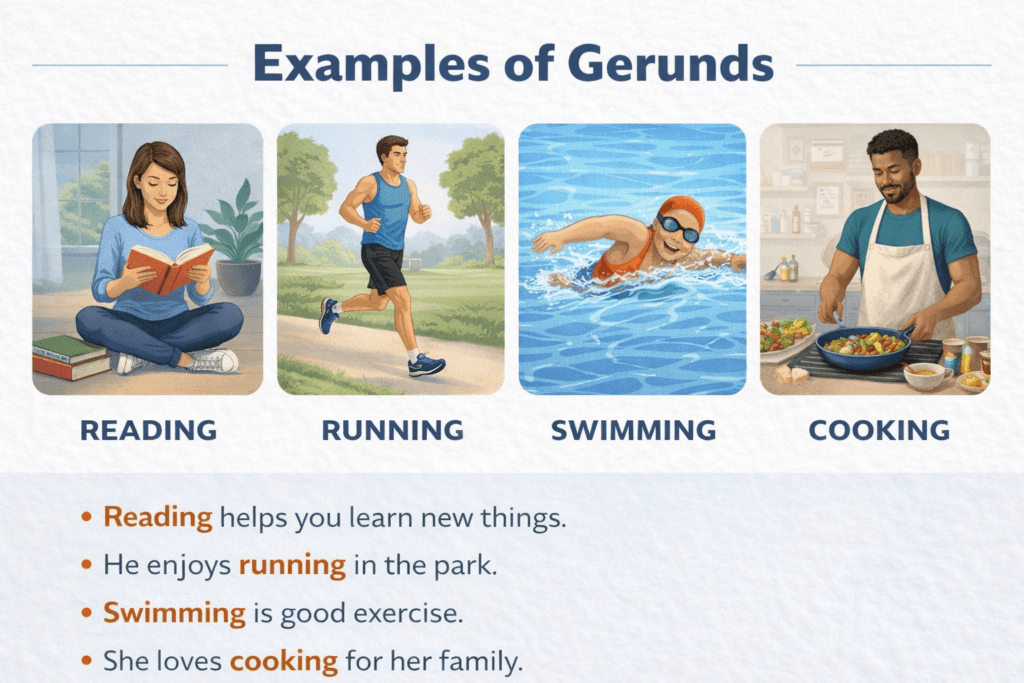
AI usually writes sentences like this:
AI version:
“Most Ghanaians have experienced economic hardship, leading to increased migration among young people.”
This is grammatically fine, but the structure appears too frequently in AI writing. A more natural human revision would be:
Human version:
“Most Ghanaians have experienced economic hardship, which has led to an increase in migration among young people.”
The meaning stays the same, but the rhythm feels calmer and more personal. The goal is not to remove all gerunds. It is simply to avoid repeating the same smooth pattern again and again.
2. Break Long Sentences
Another useful habit is breaking long sentences into shorter ones. AI prefers long, flowing lines packed with ideas.
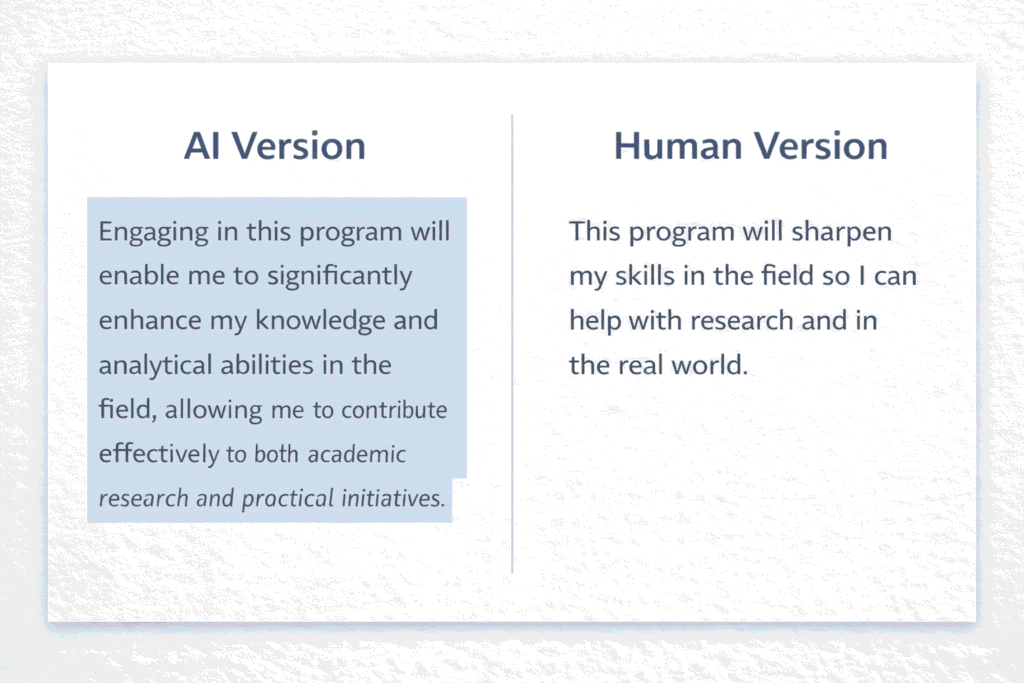
AI version:
“I am deeply passionate about public health and have consistently demonstrated commitment through volunteer activities, academic excellence, and leadership roles within my community.”
A human writer might slow the pace:
Human version:
“I care deeply about public health. I have shown this through volunteering, strong academic work, and small leadership roles in my community.”
Shorter sentences create breathing space. They sound closer to natural speech, which reviewers trust more.
3. Change Overly Formal Transitional Words
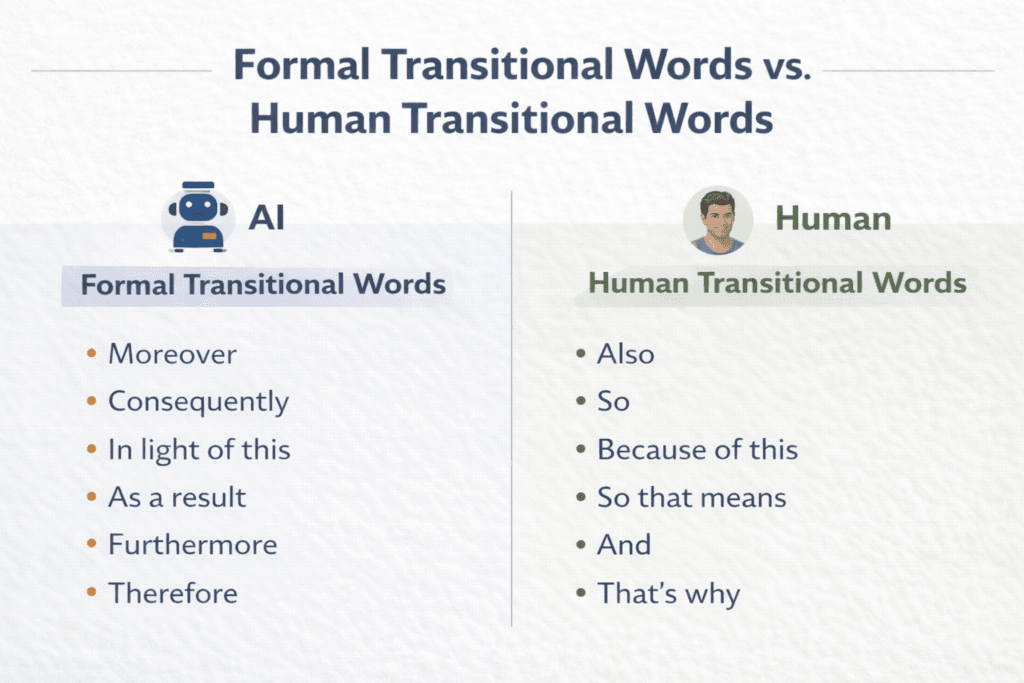
You should also soften overly formal transition words. AI depends heavily on words like moreover, furthermore, and consequently.
AI version:
“Furthermore, this opportunity will enable me to contribute significantly to national development.”
Human version:
“This opportunity will also help me contribute to my country’s development.”
The second sentence is simpler, yet still respectful and clear. Scholarship committees usually prefer clarity over decoration.
4. Add Brief Personalised Sentences
Adding one brief personal sentence can also restore humanity to the letter. AI often stays distant and perfectly balanced.
AI version:
“My academic journey has been shaped by various socioeconomic challenges.”
Human version:
“School was not always easy for me, but those challenges shaped my determination.”
The second version feels lived, not manufactured. Even a single honest line can change the tone of the entire letter.
5. Read to yourself
Finally, read your letter aloud. This simple step is powerful and completely free. Wherever your voice sounds stiff or unnatural, rewrite the sentence until it flows easily when spoken. Human writing is closely connected to speech. AI writing is usually too smooth to speak comfortably.
Removing AI tone is therefore not about technology. It is about returning to clarity, variation, and an honest voice. When you adjust sentence patterns, shorten long lines, soften formal words, and include real personal feeling, your motivation letter begins to sound like you again.
And in scholarship selection, that difference matters. Reviewers are not only looking for perfect grammar. They are looking for a real person with purpose, struggle, and direction. When your letter carries that human presence, it becomes far more difficult to ignore. You may also read about the difference between a motivation letter and a statement of purpose

Godson Nana Adu Agyei has over eight years of experience in research consulting and study design. At NurcAcademy.com, Godson applies his extensive practical experience to help students, academics and professionals understand the intricacies of research methodologies. From developing powerful research questions to conducting complex data analysis, he provides high quality, practical tutorials that bridge academic theory and real-world practice.
It is a good innovative technology.
Pingback: Are Lecturers Using AI to Grade You? The Hidden Risks