
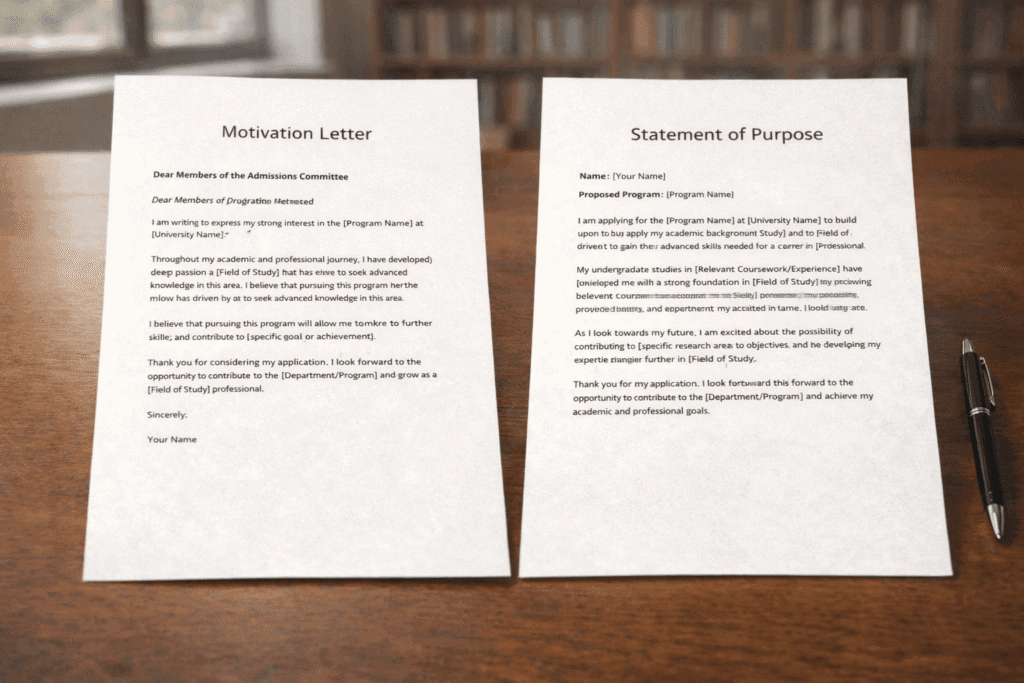
A Motivation Letter vs Statement of Purpose: Are They the Same Thing?
A motivation letter and a statement of purpose are like lawyers who speak on a person’s behalf in the absence of that person. One professional development coach once told me that in an interview, appearance, body language, and articulation account for about 60% of your success, whereas your experience makes up the remaining 40%.
But when you are not around, all 100% of the work falls on the lawyers. Therefore, having a strong and compelling motivation letter or statement of purpose counts a lot.
However, you cannot present the best motivation letter or statement of purpose if you do not know what each of them entails or if you use them interchangeably. So, what are the differences between a motivation letter and a statement of purpose? They are related, yes, but they are not the same. Below are the differences.
The Difference Between a Motivation Letter and a Statement of Purpose

The Confusion Between the Two
At first glance, the confusion makes sense. Both documents talk about you, your background, and your goals. They are both usually written in a formal tone and sent to universities, funding bodies, or research institutions. Because of this overlap, many people copy one and rename it. That is usually where problems begin.
What is a Motivation Letter?
The basic focus of a motivation letter is on why you are applying. It answers the emotional and personal side of the question. Why this opportunity? Why now? Why should they care about you as a person?
When someone reads a motivation letter, they should feel your drive, your interest, and your readiness. You are speaking directly to the reader, trying to convince them that you belong.
What is a Statement of Purpose (SOP)?
On the other hand, a statement of purpose is more structured and academic. It explains what you plan to study or research, how your background prepared you, and where this path is taking you.
The tone is calmer and more focused on logic than emotion. You are not just expressing desire. You are showing direction. Committees want to see that you understand the field and that your goals make sense.
Key Differences in Storytelling
Another key difference lies in storytelling. In a motivation letter, it is acceptable to sound personal. You may talk about a moment that changed your thinking or a challenge that shaped your ambition. You can say “I” freely and speak directly to “you,” the reader. In a statement of purpose, the story is tighter. Every experience you mention must serve a clear academic or professional goal.
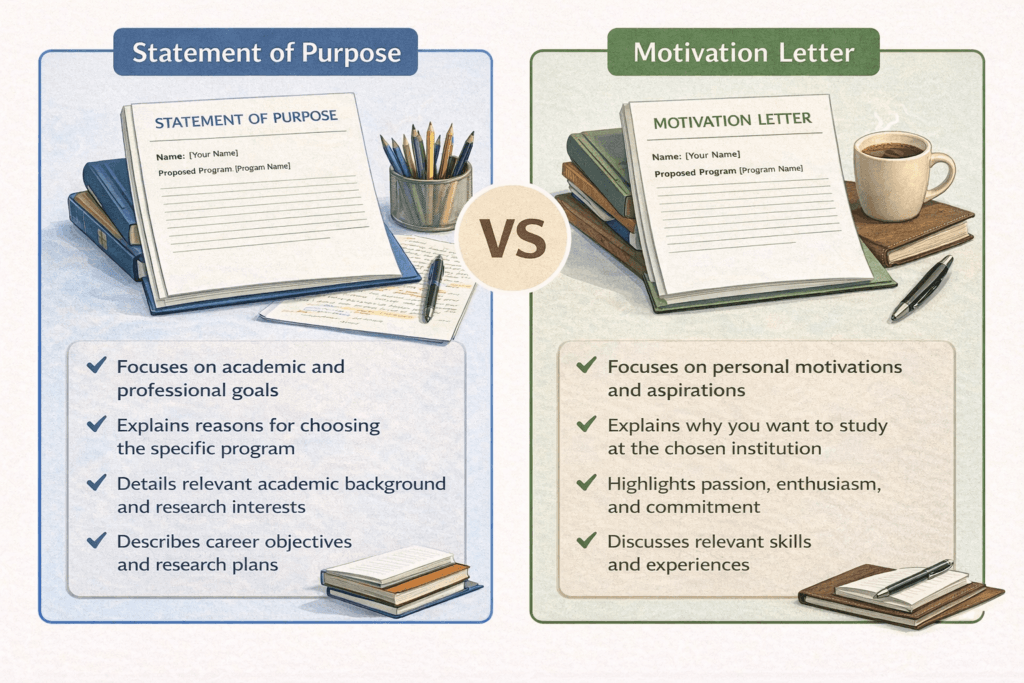
From the reviewer’s point of view, these documents serve different purposes. A motivation letter helps them assess fit and attitude. They want to know if you are serious and if you are in line with their values. A statement of purpose helps them to assess your clarity and preparedness. They want to know if your plan is realistic and if you can follow through.
If you are an applicant (you may find local scholarships here if you are not already applying), the distinction we have provided matters a lot more than it seems. Submitting a motivation letter when a statement of purpose is requested can make you appear unfocused. Doing the opposite can make you sound cold or detached. Even strong candidates lose points this way, not because they are unqualified, but because they misunderstood the task.

So what should you do when both are requested? Write them separately. Let the motivation letter show your passion and intent. Let the statement of purpose show your plan and direction. When each document does its own job, they support one another rather than compete.
In the end, the motivation letter and statement of purpose are like two sides of the same story. One explains why you want the journey. The other explains how you plan to walk the road. When readers understand both, your application becomes clearer, stronger, and much harder to ignore.
You may find help with writing a compelling motivation letter and statement of purpose by contacting Numero Uno Research Consult.

Godson Nana Adu Agyei has over eight years of experience in research consulting and study design. At NurcAcademy.com, Godson applies his extensive practical experience to help students, academics and professionals understand the intricacies of research methodologies. From developing powerful research questions to conducting complex data analysis, he provides high quality, practical tutorials that bridge academic theory and real-world practice.