
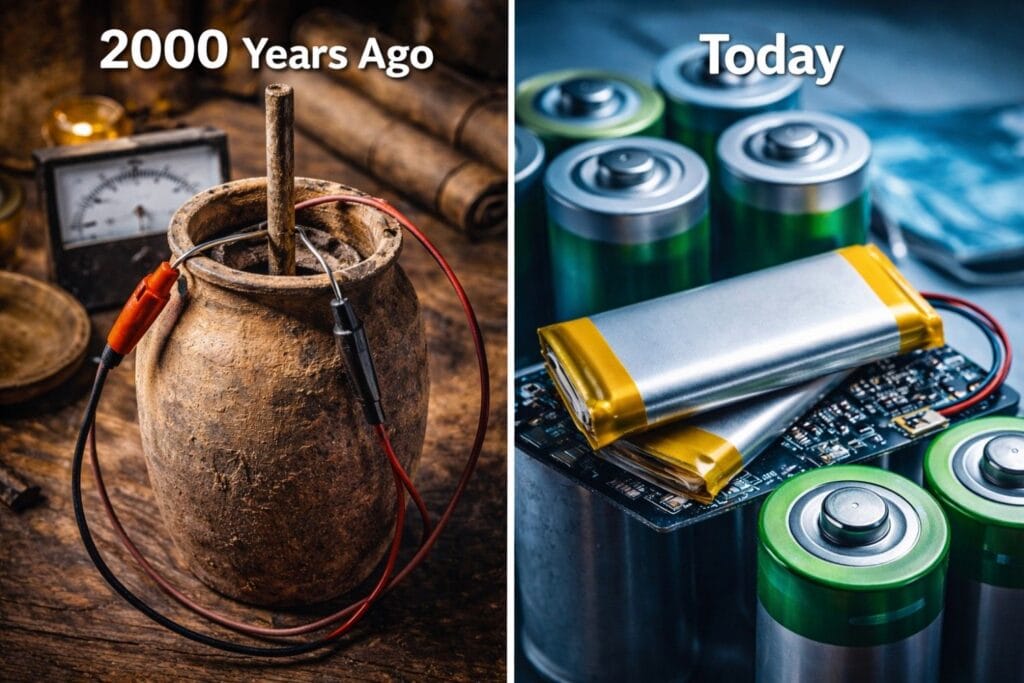
The 2000-Year-Old Mystery that Still baffles Scientists
The question of the Baghdad Battery? A few nights ago, I sat at my desk, and I looked through an old history book that detailed the ancient ruins of Mesopotamia. As I turned the heavy pages, my eyes stopped on a very strange discovery from the year 1936.
Workers dug up a small, yellow clay jar in a village near Baghdad. I suddenly remembered a long chat that I had with an old tutor of mine many years ago. We debated whether modern humans are truly the smartest people who have ever lived.
We usually assume that we hold all the answers today because we carry small computers in our pockets. But when I stared at the picture of that ancient jar, I realised a very humbling truth.
The people who lived thousands of years ago might have grasped complex science long before we did. Today, we are going to explore the mystery of the Baghdad Battery, and we will see what it tells us about our ancestors.
Is the Baghdad Battery Indeed a Battery?
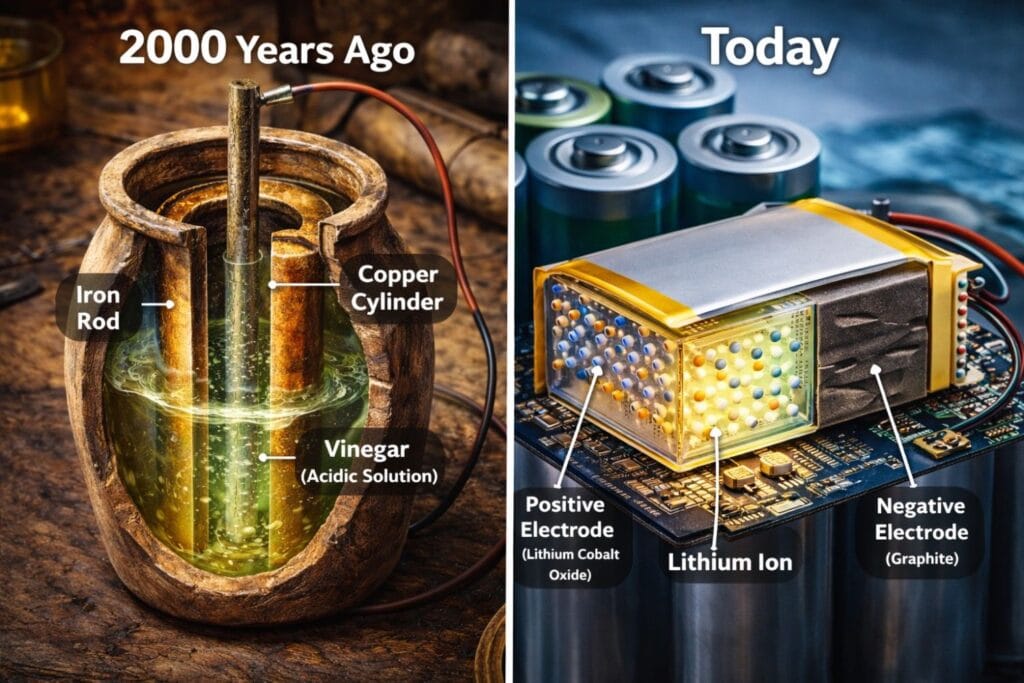
When you look at the Baghdad Battery, it does not look like anything special at first glance. It is just a plain clay pot that is about the size of a man’s hand. However, the true mystery lies inside the pot. Inside the clay, there is a hollow cylinder that is made of copper. Inside that copper tube, there is an iron rod.
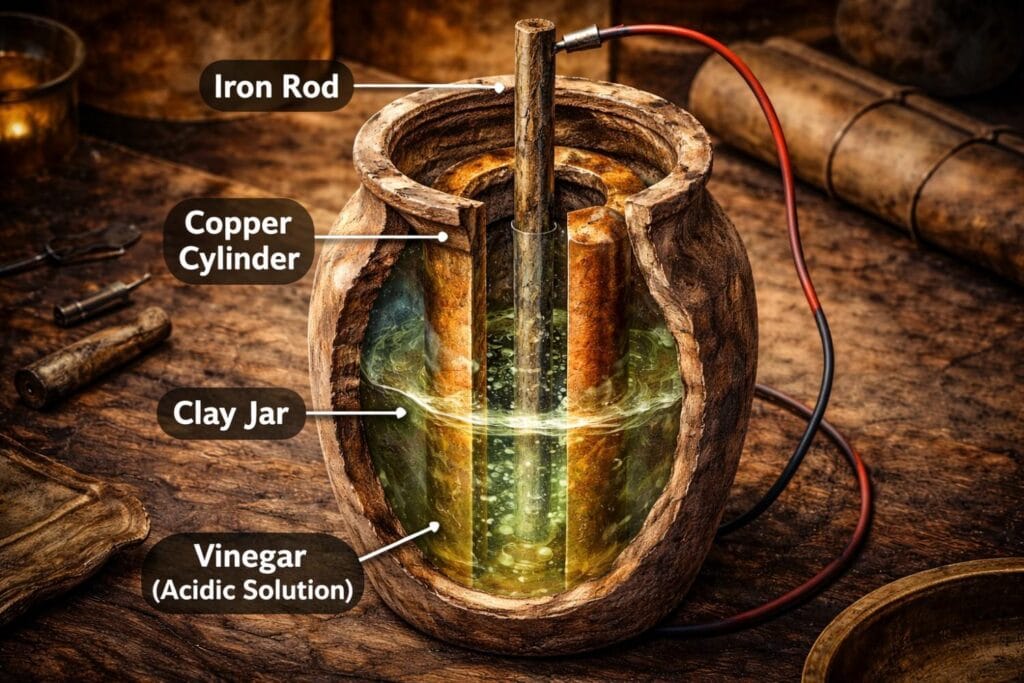
The people who made it used a plug of asphalt to seal the top. If you pour a mild acid liquid into this jar, like grape juice or vinegar, the two metals react together. They produce a small electrical charge. This means that this ancient pot operates in the exact same way that a simple battery operates today.
So, we must ask ourselves a very big question. If these ancient people really built a working battery, what did they use it for? We do not have any written records to explain it to us.
Some researchers believe that goldsmiths used the electricity to plate gold onto silver jewellery. This is a process that we still use today. Other experts suggest that doctors used the mild electrical shock to treat pain.
There is also a very fascinating theory that priests hid these jars inside religious statues. When a person touched the statue, he or she would feel a mysterious tingle, which would make them believe that the statue held a magical power.
The Biggest What If?
To make sure that we look at all the facts, we also need to hear what the sceptics say. Many strict archaeologists argue that these pots were never batteries at all.
They point out that nobody has ever found any ancient wires that would carry the electricity. These experts suggest that the jars were simply safe containers that protected delicate papyrus scrolls. They argue that the iron and the copper were just there to keep the paper safe from the weather and from insects.
We might never know the absolute truth about the Baghdad Battery. But whether it was a real electrical device or just a clever way to store ancient documents, it proves one very important thing to us. The people who lived back then were incredibly resourceful.
They experimented with metals and chemicals in ways that we do not usually expect from ancient civilisations. When we study mysteries like this one, it reminds us that human curiosity is a force that has always existed.
The mystery of the Baghdad Battery is still baffling even today. You may also share your views.
In our previous article, we discussed how you can write the first sentence of your research paper. Read it here

Godson Nana Adu Agyei has over eight years of experience in research consulting and study design. At NurcAcademy.com, Godson applies his extensive practical experience to help students, academics and professionals understand the intricacies of research methodologies. From developing powerful research questions to conducting complex data analysis, he provides high quality, practical tutorials that bridge academic theory and real-world practice.